Best eCommerce & Retail Software for Small Businesses
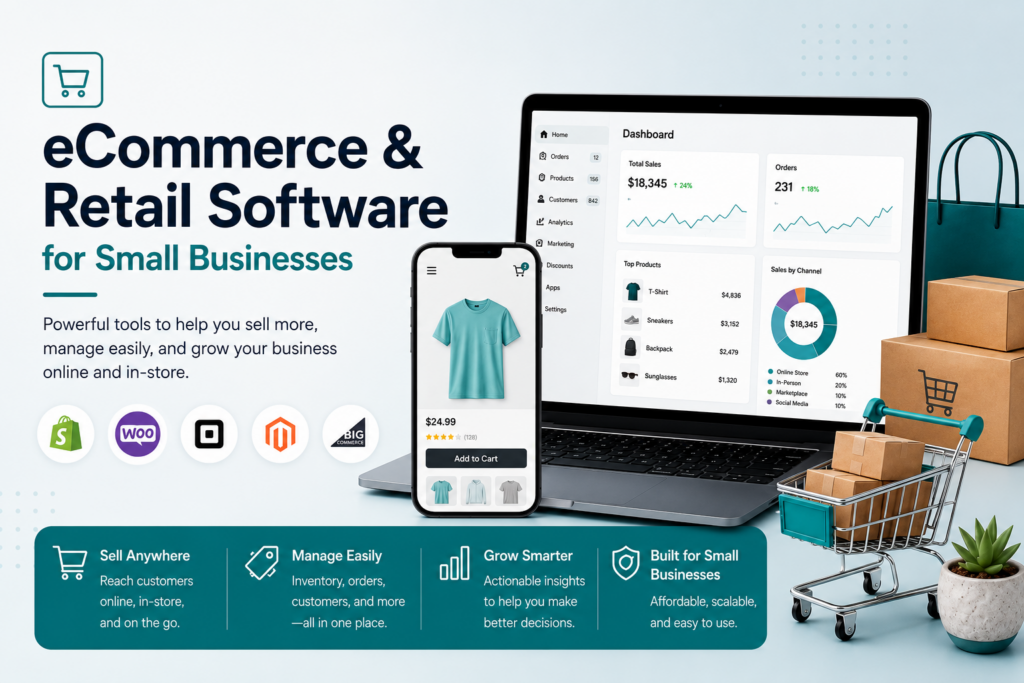
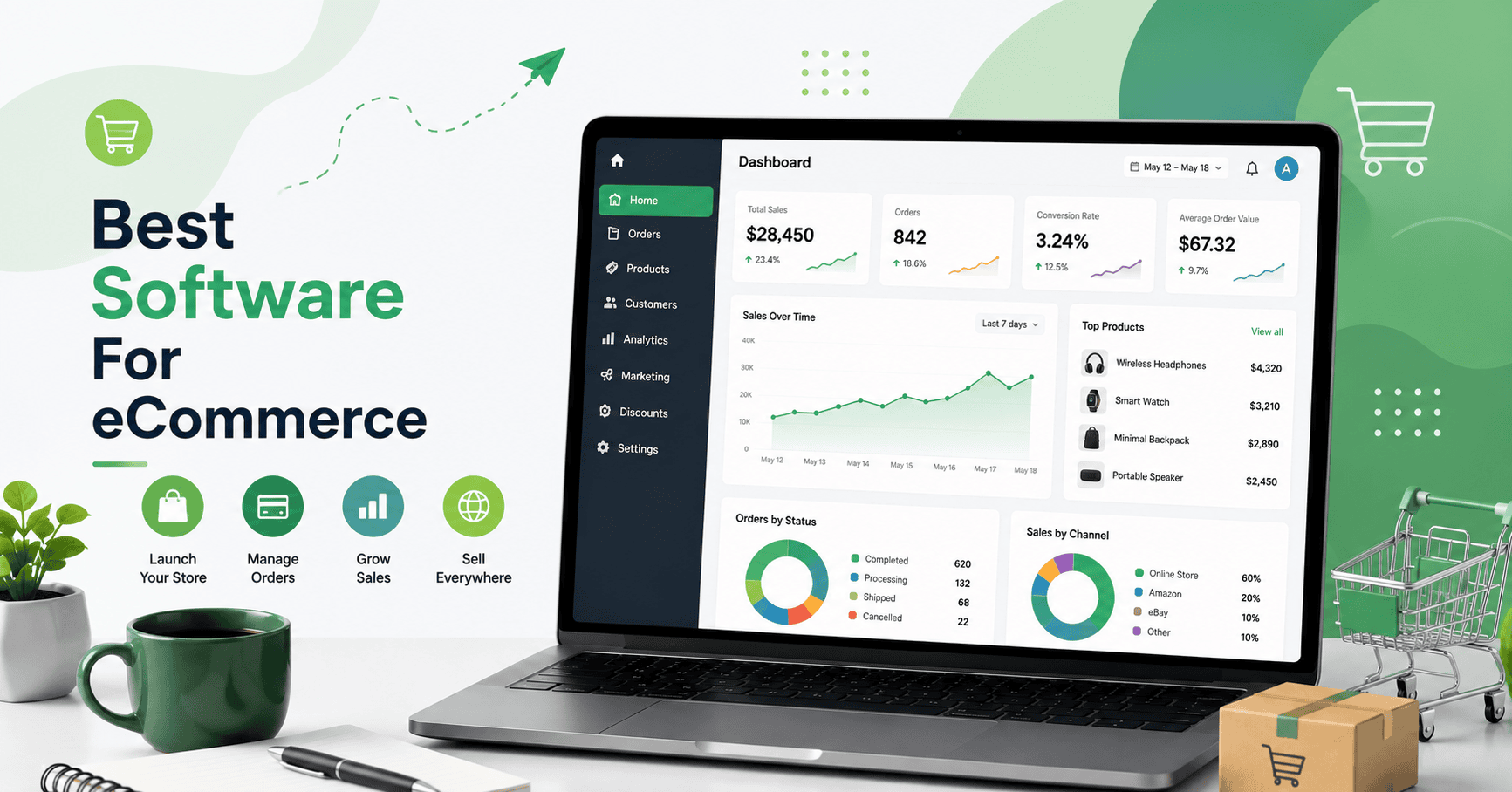
Selling online and selling in person run on different software, and most small businesses eventually need both. This page splits the category the way most retail businesses actually shop it: full online store platforms, website builders with selling features bolted on, and point-of-sale systems for a physical counter.
Our Top Picks
| Software |
Best For |
Standout Strength |
Key Tradeoff |
Full Review |
| Shopify |
Dedicated online stores of any size |
The largest app ecosystem and most third-party developer support in eCommerce |
Transaction fees apply unless you use Shopify Payments |
Read the Shopify review |
| BigCommerce |
Growing stores wanting more built-in features without add-ons |
More native functionality out of the box than Shopify’s base plan |
Smaller app marketplace than Shopify |
Read the BigCommerce review |
| Square POS |
Simple, affordable in-person checkout |
Straightforward hardware and setup with no monthly fee on the base plan |
Advanced retail features require higher tiers |
Read the Square POS review |
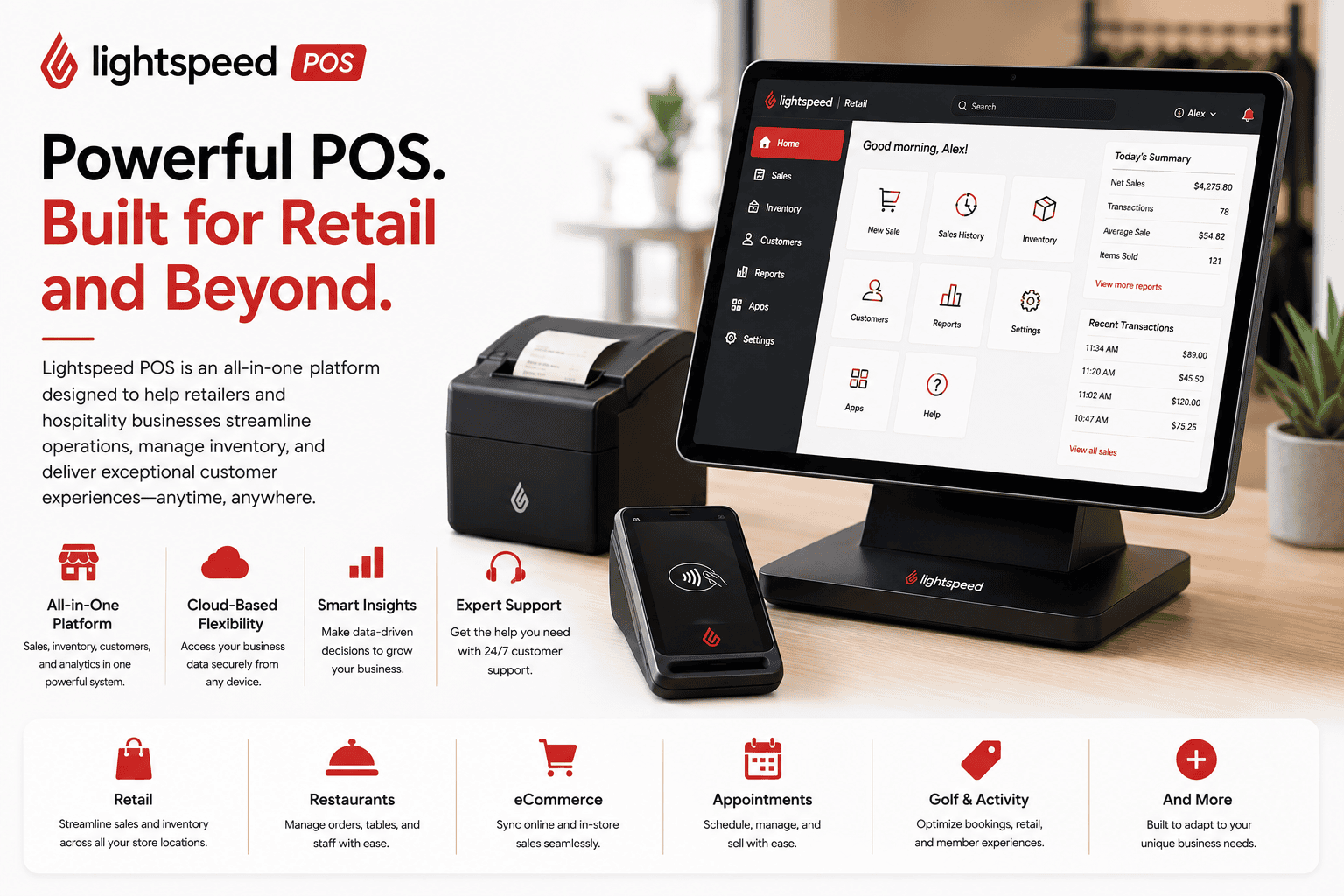
| Lightspeed |
Retailers needing deeper inventory management |
Stronger multi-location and inventory tools than most POS competitors |
Higher cost and steeper setup than Square |
Read the Lightspeed review |
Best Full-Featured Online Store Platforms
Shopify is the default recommendation for a dedicated online store, mainly on the strength of its app ecosystem — whatever specific feature your store needs (subscriptions, advanced shipping rules, loyalty programs), there’s almost certainly a Shopify app for it. BigCommerce is the closest direct alternative, and the more sensible pick for a store that wants more advanced functionality built in natively rather than pieced together from paid apps, which can lower total cost for a feature-heavy store. Read the full Shopify review or full BigCommerce review for current plans and pricing.
Best Website Builders With Built-In Selling
If you need a website first and an online store second — a service business that also sells a handful of products, for example — Wix and Squarespace both support e-commerce well enough without requiring a dedicated store platform. Neither matches Shopify’s app depth for a store that’s the whole business, but both are strong if the store is a feature of a broader site rather than the entire point. Read the full Wix review or full Squarespace review.
Best Point-of-Sale (POS) Software for Physical Retail
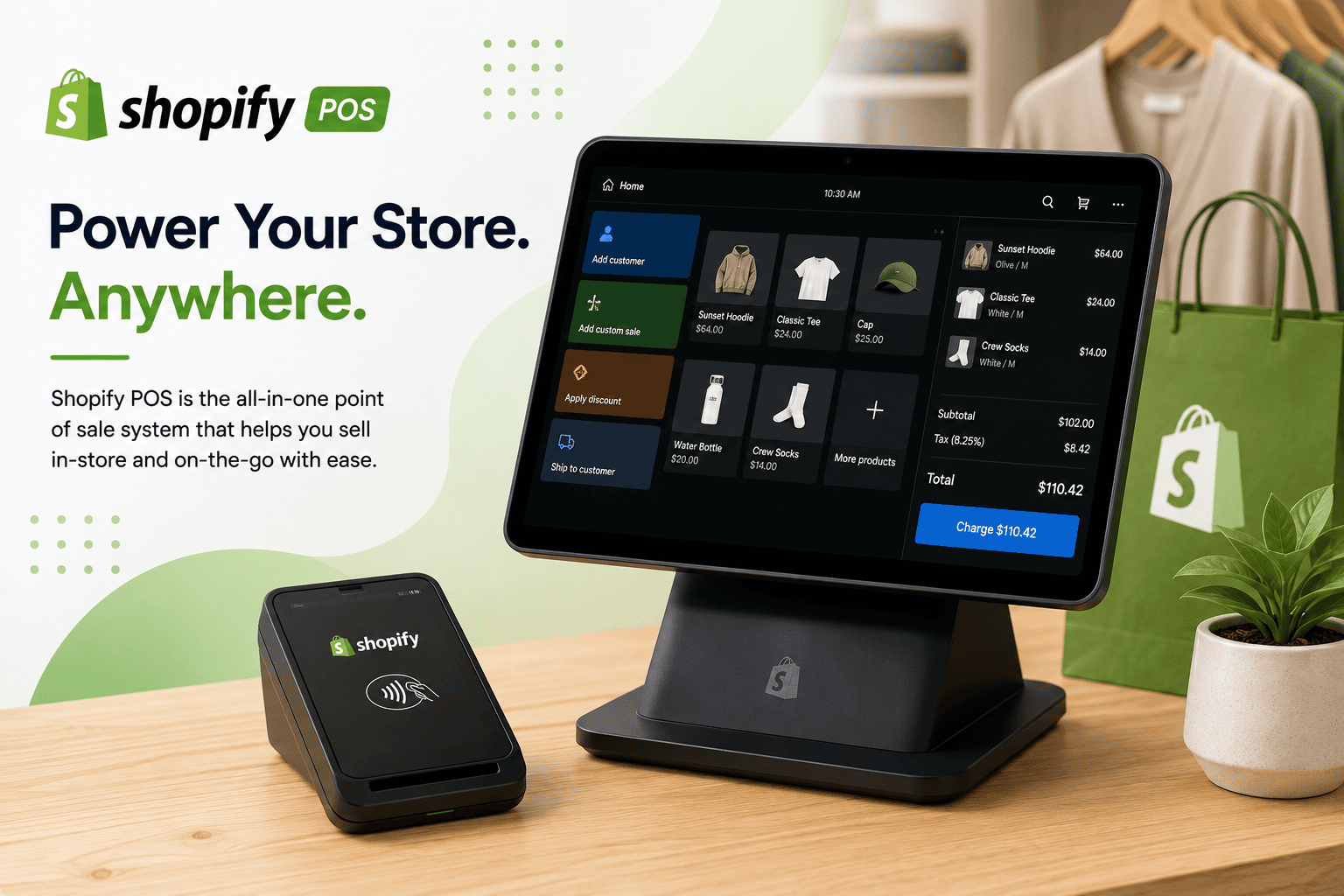
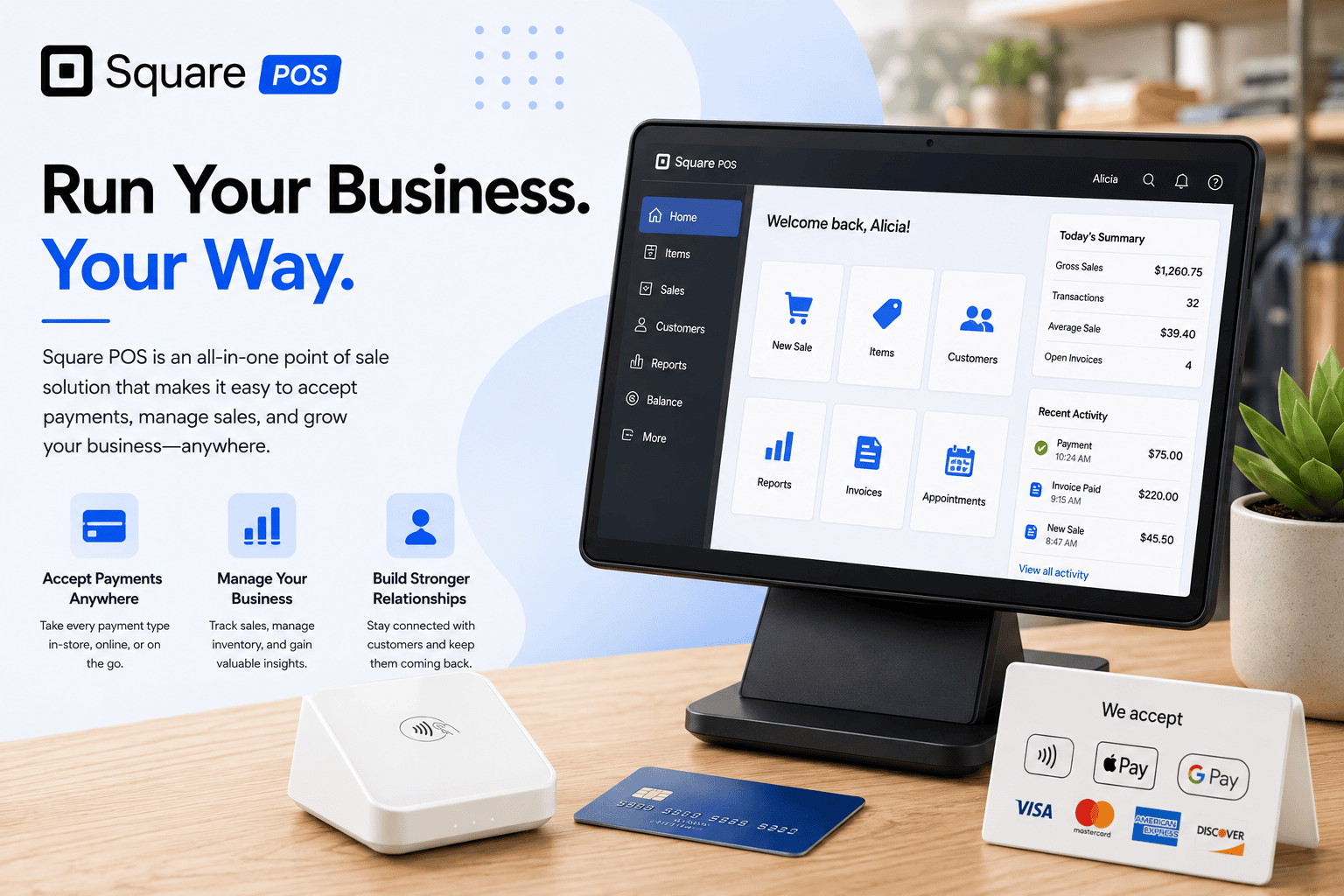
Square POS remains the easiest on-ramp for a small retail counter or pop-up — inexpensive hardware, no required monthly fee to get started, and a setup most new staff can learn same-day. Shopify POS is the natural choice if you’re already selling on Shopify online and want inventory and orders unified across both channels rather than managed separately. Lightspeed is the better fit once inventory complexity grows — multi-location retailers, businesses with large or frequently changing product catalogs, or anyone who’s outgrown Square’s simpler inventory tools. Clover POS rounds out the category as a flexible, hardware-forward option worth comparing directly against Square for businesses that want more built-in customization at the terminal. Read the full reviews: Square POS, Shopify POS, Lightspeed, Clover POS.
What to Look for in eCommerce & Retail Software
Where you’re actually selling. Online-only, in-person-only, and omnichannel businesses need genuinely different software, not the same platform with a different label. Confirm a platform’s in-person and online tools are actually unified before assuming they’ll sync automatically.
Transaction fees versus your own payment processor. Some platforms charge an extra fee unless you use their in-house payment processing, which can meaningfully change your real cost per sale — model this against your expected sales volume, not the advertised subscription price alone.
Inventory complexity today and in twelve months. A POS system that handles 50 SKUs comfortably may struggle at 5,000, or across multiple locations. Buying ahead of your current needs is sometimes worth it if you’re growing quickly; buying far ahead of them just adds cost and complexity you don’t need yet.
App and integration ecosystem, especially for a dedicated online store — the platform itself rarely does everything a growing store needs, and how easy (and expensive) it is to extend matters as much as the core feature set.
How We Evaluate eCommerce & Retail Software
This category page and its linked reviews are research-based, drawing on official pricing and documentation, independent user feedback, and third-party comparisons. We weigh core selling functionality for the platform’s specific use case (online store, website-plus-store, or in-person POS), pricing and transaction-fee structure, inventory and multi-location support, and integration or app-ecosystem depth.
All eCommerce & Retail Software Reviews
For a general-purpose website without a strong e-commerce focus, see our Website Builders & WordPress page instead.