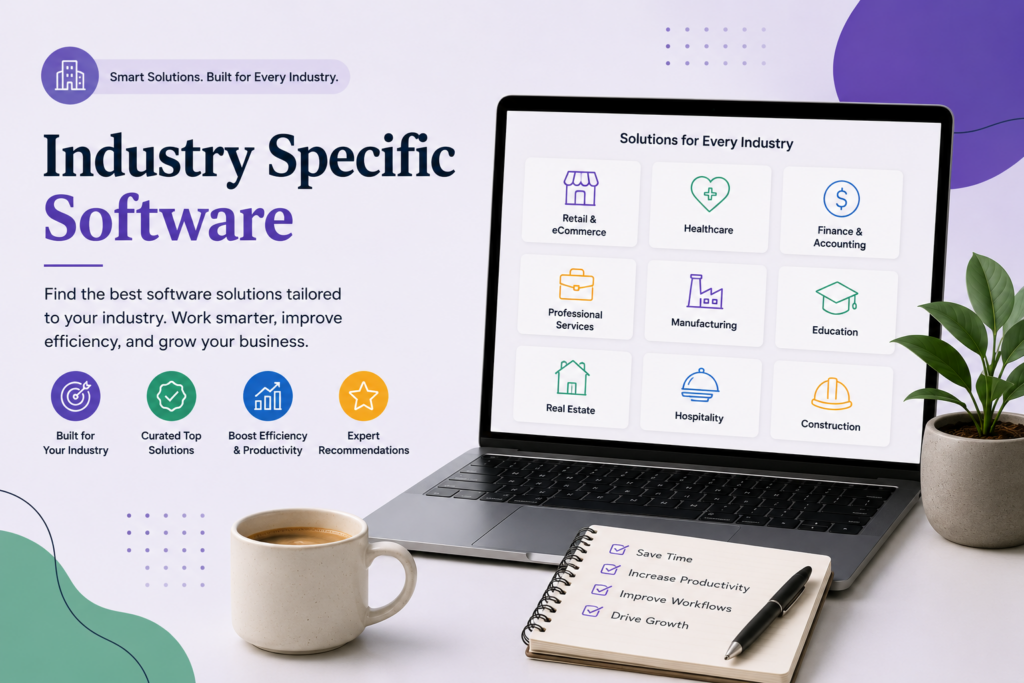
Why would I need industry-specific software instead of a general business tool?
General tools cover common needs like invoicing or scheduling, but they often miss the specific workflows your industry runs on — job costing for contractors, lease tracking for landlords, or dispatch routing for field service businesses. Industry-specific software builds those workflows in natively instead of requiring workarounds.
Is industry-specific software more expensive than general business tools?
It varies. Some specialized platforms cost more because they include deeper functionality built for complex workflows, while others are priced comparably to general tools but simply organized around your industry’s terminology and processes. Weigh the cost against the time saved from not having to customize a generic tool yourself.
Can industry-specific software still integrate with tools I already use?
Most established platforms integrate with common tools like QuickBooks, Google Workspace, and payment processors, so switching to an industry-specific tool doesn’t usually mean abandoning your existing tech stack.
How do I know if my business has outgrown a general-purpose tool?
If you find yourself building manual workarounds, spreadsheets, or workflows just to make a generic tool fit your industry, that’s usually the sign. Industry-specific software exists precisely to eliminate those workarounds.
Do I need training to use industry-specific software?
Most platforms are designed for business owners without technical backgrounds, though the learning curve can be steeper than general tools given the added depth. Many providers offer onboarding support, live training, or migration assistance to ease the transition.
Can I switch from a general tool to an industry-specific one without losing my data?
Most reputable platforms offer data import or migration support from spreadsheets or common competing tools. Confirm this capability before switching, especially if you have years of historical records to bring over.