Is Upfluence Worth It? Extensive Review Plus a Quick Start Guide for Small Businesses
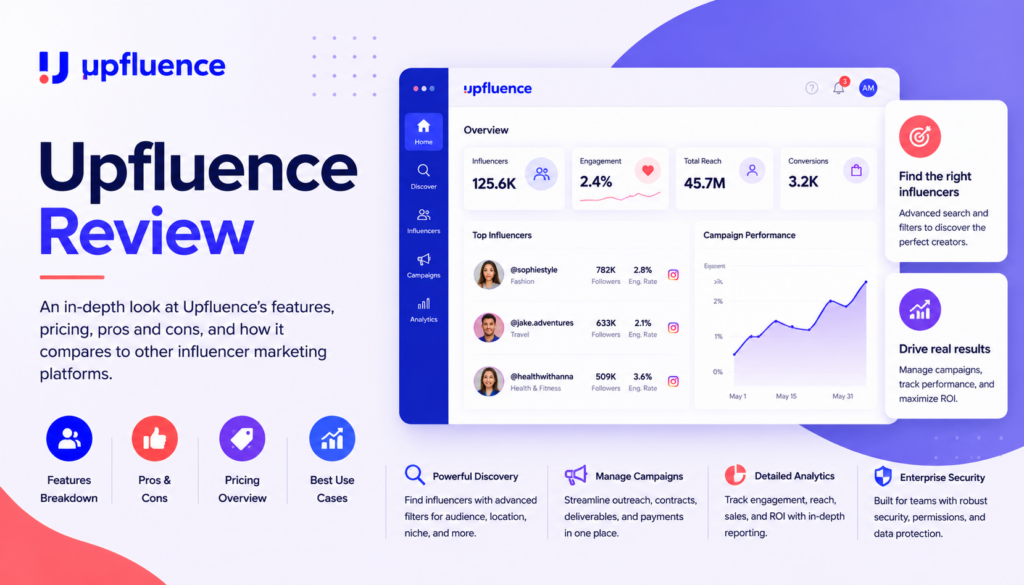
Influencer marketing has grown from a nice-to-have experiment into one of the most reliable customer acquisition channels for ecommerce brands. But anyone who has tried to run creator campaigns by hand — DMing influencers one at a time, tracking promo codes in spreadsheets, chasing invoices — knows how quickly the workload spirals. Upfluence is one of the best-known platforms built to solve exactly that problem: a single system for finding creators, managing outreach, running campaigns, tracking sales, and paying partners.
But Upfluence is also a significant investment with a real learning curve, and the reviews online are more mixed than its marketing suggests. In this article, we’ll break down what Upfluence actually does, what professional reviewers and past customers are saying about it, how to get started if you sign up, and the tips and tricks that separate brands who get real ROI from those who churn out after a frustrating year.
What Is Upfluence and Who Is It For?
Upfluence is a cloud-based influencer and creator marketing platform founded in 2013. It gives brands access to a searchable database of millions of creators across Instagram, TikTok, YouTube, Twitch, Twitter/X, and Pinterest, then layers campaign management, affiliate tracking, and payment processing on top. The company serves more than 1,600 clients worldwide, including recognizable names like Amazon, Marriott, Asics, and Universal Music.
The platform is sold in three core modules. Search & Contact is the discovery engine — influencer search, matching, audience analytics, and email outreach integrated with Gmail and Outlook. Workflow (the campaign manager) adds campaign tools, tracking, affiliate links, promo codes, and creator landing pages. Payments, powered by Stripe, handles creator compensation, commissions, invoicing, and tax compliance. Most brands running real campaigns end up needing all three.
Upfluence’s sweet spot is direct-to-consumer ecommerce. Its integrations with Shopify, WooCommerce, BigCommerce, Magento, Amazon, and Klaviyo let it do something genuinely distinctive: scan your existing customer and subscriber lists to find people who are already influencers. Its Live Capture tool even identifies socially influential visitors browsing your website, so you can recruit ambassadors who already know and like your products. According to Upfluence, these organic advocates are seven times more likely to accept a free-product collaboration and significantly cheaper to work with than cold-pitched creators.
More recently, Upfluence has added a Creator Marketplace with millions of performance-verified creators and an AI assistant called Jaice, which helps interpret audience demographics, engagement quality, and brand affinity to speed up creator matching.
Upfluence Review: What Reviewers and Real Customers Are Saying
To build a balanced picture, we examined professional evaluations from Influencer Marketing Hub, SelectHub, GetApp, and ITQlick alongside verified customer reviews from G2, Trustpilot, and other user-review platforms. The short version: Upfluence is a capable, feature-rich platform with genuine differentiators — and equally genuine complaints about cost, contracts, and complexity.
The Professional Verdict
Professional reviewers generally rate Upfluence well on capability. Influencer Marketing Hub praises its evolution from an early search-and-discovery tool into an AI-powered, end-to-end creator marketing platform, calling out the customer-to-creator matching and real-time creator database as standout strengths. ITQlick ranks it near the top of its category and highlights granular reporting that supports continuous campaign optimization, while noting that premium features and expanded AI capabilities have substantially raised the subscription cost. SelectHub’s synthesis of user feedback describes a platform that is “both a lifesaver and a bit of a headache” — powerful analytics and global reach on one side, a cumbersome interface and steep learning curve on the other.
Reviewers consistently agree on the ideal customer: a mid-market or established D2C ecommerce brand (or agency) with a dedicated influencer marketing budget and at least one person who can own the platform. For very small teams testing influencer marketing for the first time, most reviewers suggest starting with lighter, cheaper alternatives.
What Customers Love
Time savings through automation. The most common theme in positive reviews. Users on G2 report that Upfluence saved their teams significant daily campaign time and made sales tracking clearer than ever before. Automated influencer discovery, bulk outreach with templates, drip emails, automated follow-ups, and AI-personalized messaging replace hours of manual work.
Sales attribution that proves ROI. Ecommerce brands consistently praise the affiliate link and promo code tracking that ties revenue directly to individual creators. One growth marketing manager noted the Shopify integration was easy to set up and delivered exactly the data the team needed at the right time. Reviewers also like being able to connect creator activity to revenue, ROI, and average order value on performance dashboards.
Customer-base creator discovery. The ability to surface influencers from your own customers, subscribers, and website visitors gets repeated praise as a rare and valuable capability that most competitors simply don’t offer.
Responsive, human support. Multiple G2 reviewers single out the support team as genuinely helpful rather than robotic, and enterprise plans include a dedicated account manager, custom onboarding, and training.
Handy extras. Users like the browser integration that pulls up a creator’s metrics while scrolling Instagram or TikTok, plus free tools like the Fake Follower Checker and Engagement Rate Calculator for vetting authenticity.
What Customers Complain About
Cost and opaque pricing. Upfluence doesn’t publish prices — you have to book a demo. Third-party listings cite a starting point around $478 per month for a single module, but recent demo-based reporting puts a realistic all-module setup at roughly $1,276 per month, or about $14,000–$16,000 per year, plus per-seat fees for additional users. For small businesses, that’s a serious line item.
The mandatory 12-month contract. All plans require an annual commitment with no month-to-month option, and this is the single loudest complaint on Trustpilot — including reports from brands who believed they were signing up for a shorter trial and discovered they were locked in for a year. There are no free trials, so you’re committing without hands-on testing.
Steep learning curve and time investment. Even satisfied users acknowledge it took two or three onboarding meetings before they felt they’d mastered the tool. Less satisfied users go further: one G2 reviewer spent six months on the platform and found it so time-consuming and unintuitive that campaigns felt like a chore, reporting that even creators struggled with deep links and payments. SelectHub’s review synthesis echoes this, citing a cumbersome interface, limited customization, and onboarding gaps.
Mixed review scores across platforms. Upfluence holds generally positive ratings on G2 and GetApp, but noticeably lower scores on Trustpilot — a spread driven largely by contract and billing disputes rather than core functionality.
The Bottom Line
Upfluence is a legitimate, full-stack influencer marketing platform with real differentiators — customer-base discovery, Live Capture, deep ecommerce integrations, and end-to-end payment handling. But it is priced, contracted, and structured for brands that are serious about influencer marketing as an ongoing channel. If you have the budget, a person to own it, and a 12-month horizon, it can absolutely turbocharge your creator program. If you’re dabbling, the annual contract and learning curve make it a risky first step.

Quick Start Guide: Getting Up and Running with Upfluence
Because Upfluence is sold through a sales process rather than self-serve signup, your “quick start” begins before you ever log in. Here’s how to do it right.
Step 1: Define Your Goals Before the Demo
Decide what success looks like: affiliate sales, brand awareness, user-generated content, or ambassador recruitment. Your goals determine which modules you need and give you concrete questions for the sales call. Walk in knowing your monthly budget ceiling and how many team seats you’ll need.
Step 2: Book the Demo and Negotiate Deliberately
Pricing is custom and quote-based, so treat the demo as a negotiation. Ask for line-item pricing on each module, clarify exactly what the 12-month contract covers, ask about shorter terms (some users report negotiating six-month agreements), and get every promise in writing. Do not sign until you understand the total annual cost including per-seat fees.
Step 3: Connect Your Ecommerce Stack on Day One
Once onboarded, immediately connect Shopify, WooCommerce, BigCommerce, Magento, or Amazon, plus Klaviyo if you use it for email. These integrations power Upfluence’s best features — customer-base creator matching and sales attribution — so nothing else matters until they’re live. Install the Live Capture snippet on your website at the same time.
Step 4: Attend Every Onboarding Session
This is not software you learn by poking around. Users consistently report that mastering Upfluence took multiple training meetings, and that the sessions revealed useful tricks they wouldn’t have found alone. Block the time, bring your whole team, and record the calls.
Step 5: Run Your First Discovery Searches
Start with two parallel searches: one through your own customer data (your warmest, cheapest potential partners) and one through the creator database, filtered by audience demographics, engagement rate, location, and content relevance. Vet each candidate’s real-versus-fake follower ratio and estimated fees before shortlisting.
Step 6: Build Outreach Templates and Launch a Pilot Campaign
Set up personalized email templates with automated follow-ups through your Gmail or Outlook integration. Then launch a small pilot — ten to twenty creators — with clear briefs, unique promo codes, and affiliate links for each partner. A contained pilot lets you learn the workflow before you scale.
Step 7: Set Up Payments and Tracking
Configure the Payments module (or your chosen payment workflow) before creators deliver content, not after. Reviewers note that payment friction is one of the fastest ways to damage creator relationships, so test the deep links and payout flow yourself before your partners have to.
Step 8: Review Your Dashboard Weekly
From week one, build the habit of checking campaign dashboards: reach, engagement, clicks, conversions, and revenue per creator. Early data tells you which creator profiles to double down on in round two.
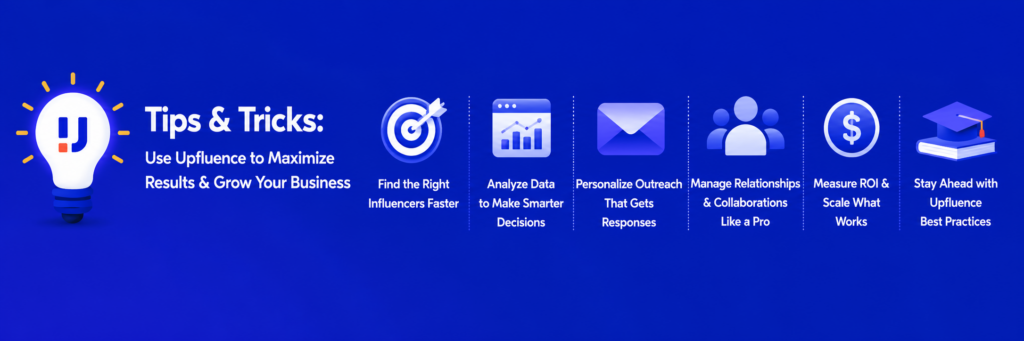
Tips & Tricks: Using Upfluence.com to Actually Grow Your Business
Mine Your Own Customers First
This is Upfluence’s superpower — use it. Creators pulled from your customer and subscriber lists already love your product, accept collaborations far more readily, and cost less than cold outreach targets. Make customer-base matching your default sourcing channel and treat the big external database as a supplement.
Rank and Re-Book Your Winners
The influencer relationship management dashboard ranks creators by performance across campaigns. Use it. Most brands see the majority of influencer revenue come from a small core of top performers, so build long-term ambassador relationships with your top 10–20% instead of constantly recruiting strangers.
Let Attribution Decide Your Budget
Because every creator gets a unique promo code and affiliate link, you can calculate true revenue per creator, cost per acquisition, and ROI by partner. Reallocate budget monthly based on that data — it turns influencer marketing from a brand-awareness guess into a performance channel.
Use Jaice AI to Shorten the Shortlist
Rather than manually reviewing hundreds of profiles, use the AI assistant to filter for audience quality, brand affinity, and engagement patterns, then apply the Fake Follower Checker before final selection. Validate AI suggestions with your own judgment, though — reviewers caution that automated audience analysis can skew if taken uncritically.
Automate Outreach, but Personalize the First Line
Bulk templates with drip follow-ups will dramatically lift your response volume, but creators can smell pure copy-paste. Use the AI personalization features to customize the opening of each message with something specific to the creator’s content. Response rates — and relationship quality — improve markedly.
Make Creator Experience a Priority
Negative reviews frequently mention creators struggling with deep links and payouts. Head this off: send partners a one-page how-to for their links and codes, test the payment flow before launch, and pay promptly. Creators talk to each other, and a reputation as an easy brand to work with is a recruiting asset.
Track Everything Against the Contract Clock
You’re on a 12-month commitment, so run the platform like an investment with a deadline. Set quarterly ROI checkpoints, document what’s working, and start your renewal evaluation by month nine. If the numbers justify renewal, negotiate from data; if they don’t, you’ll have plenty of runway to plan a transition instead of auto-renewing by accident — another common complaint in customer reviews.
Don’t Buy Modules You Won’t Use
If you’re only doing discovery and outreach at first, ask whether you can start with Search & Contact and add Workflow and Payments once campaigns scale. Modular pricing cuts both ways: it can gate features, but it can also trim the bill if you negotiate deliberately.
Final Thoughts
Upfluence is not a casual tool, and the reviews reflect that honestly: brands with budget, patience, and a dedicated owner praise its automation, attribution, and customer-to-creator discovery, while under-resourced teams often bounce off its learning curve and balk at its contract terms. For a small business that has validated influencer marketing and is ready to scale it into a measurable revenue channel, Upfluence offers one of the most complete toolsets on the market. Go in with clear goals, negotiate the contract carefully, invest fully in onboarding, and let the attribution data drive your decisions — and the platform can genuinely turbocharge your growth. Go in casually, and you may become one of the frustrated reviews you just read about.